What Is Ice and Water Shield? Why Reno Roofs Need It Before Winter
November 2, 2026
When homeowners think about what keeps a roof from leaking, they usually picture the shingles or tile on the surface. Underneath those materials, however, there is another layer of protection that does some of the most important work during a Northern Nevada winter. Ice and water shield is a self-adhering waterproof membrane installed in the areas of a roof most likely to leak, and it plays a major role in protecting homes in Reno, NV and Sparks, NV from melting snow, ice buildup, and wind-driven rain. Understanding what it is and where it belongs can help you make better decisions about your roof.
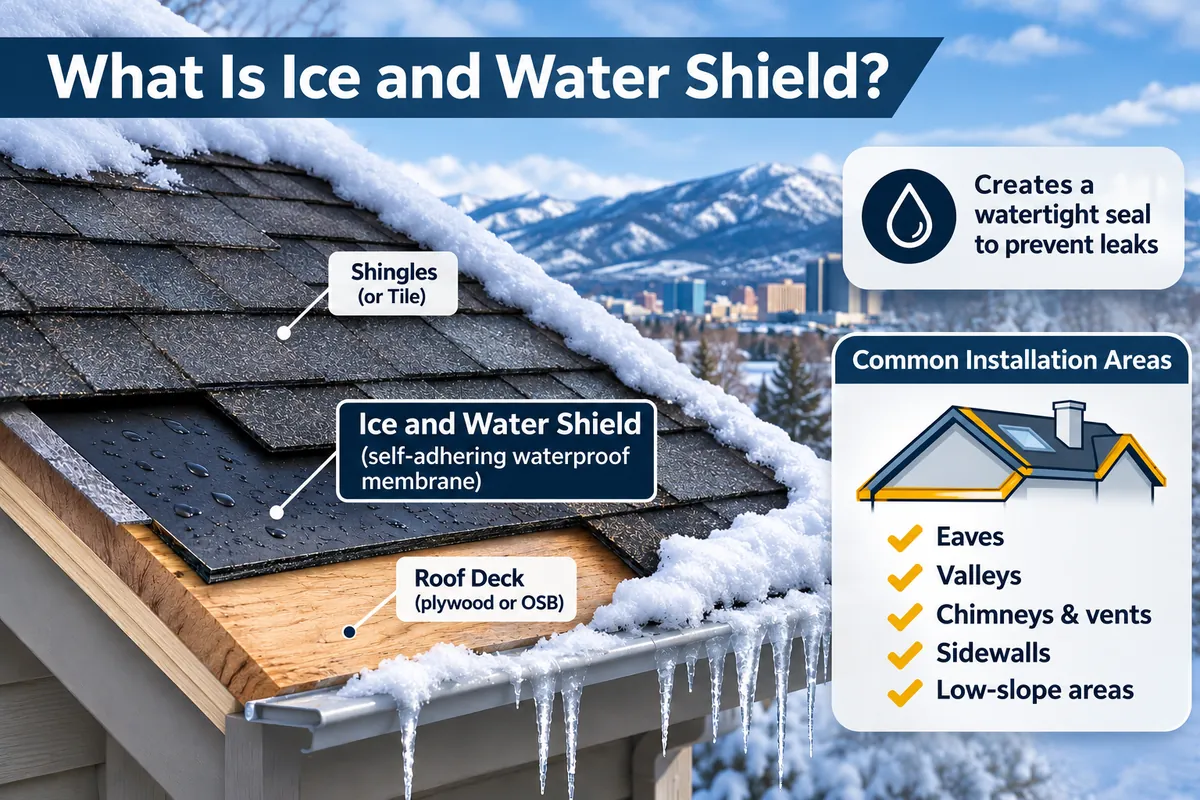
What Is Ice and Water Shield?
Ice and water shield is a rubberized asphalt membrane with an adhesive back that bonds directly to the roof deck. It is installed beneath the shingles or tile, on top of the plywood or OSB sheathing, in the sections of the roof where water is most likely to collect or back up. Because the membrane adheres to the deck, it creates a watertight seal that ordinary roofing layers cannot match. If you want to understand the layer it sits on, our article on roof decking and the signs of deck damage explains the foundation of the roofing system.
Ice and Water Shield vs. Standard Roof Underlayment
Most of a roof is covered with standard underlayment, which is typically a synthetic sheet or traditional felt fastened over the decking. Underlayment provides a secondary layer of protection, but it is designed to shed water that runs downhill rather than to stop water that sits on the roof or is pushed upward. Ice and water shield goes further because the membrane seals around each roofing nail that passes through it, which helps keep water from following fasteners into the decking. That self-sealing quality is what makes an ice and water barrier so valuable in the vulnerable areas of a roof, while standard underlayment remains the practical choice for the open field of the roof.
Why Ice and Water Shield Matters on Reno Roofs
Northern Nevada winters are known for repeated freeze-thaw cycles. Snow can melt under strong afternoon sun and refreeze overnight, and each cycle gives water a chance to work its way under roofing materials, especially along the lower edges of the roof where melting snow refreezes. Strong winds in the Reno area can also drive rain and snow sideways beneath shingles and into roof valleys. Ice and water shield gives the roof a sealed line of defense in exactly the places where these conditions cause trouble, and our guide to why roofs leak when snow melts explains this process in more detail.
Where Is Ice and Water Shield Installed on a Roof?
Ice and water shield is not usually installed over the entire roof. Instead, roofers place it in the areas that face the greatest risk of leaks. The most common locations include:
- Eaves, the lower edges of the roof where ice dams form
- Valleys, where two roof slopes meet and channel large amounts of water
- Around chimneys, skylights, and plumbing vents
- Along sidewalls where the roof meets a vertical wall
- Low-slope sections where water drains slowly
Where an ice barrier is required, building codes typically call for it to extend from the edge of the eave to at least 24 inches inside the exterior wall of the home. That placement protects the area over the heated part of the house, where ice dams are most likely to push water back under the roofing. Around chimneys and other penetrations, the membrane works together with metal flashing, and our article on roof flashing repair in Reno explains how flashing protects these transitions.
How Ice and Water Shield Helps Prevent Ice Dam Leaks
An ice dam forms when heat from the attic warms the roof deck and melts snow on the upper part of the roof. The meltwater runs down toward the colder eaves, where it refreezes into a ridge of ice. More melting snow then pools behind that ridge with nowhere to drain, and the water can back up under the shingles. Without a sealed membrane underneath, that water can soak the decking and stain ceilings inside the home. Ice and water shield does not stop ice dams from forming, but it helps keep the water that backs up behind them out of your home. Proper attic ventilation and insulation address the cause, while the membrane protects the roof when ice dams do occur.
Does Your Roof Need an Ice and Water Barrier?
Requirements for ice and water barriers can vary depending on the jurisdiction, the elevation, and the history of ice buildup in an area. Even where it is not strictly required, many roofing professionals consider it a smart investment for homes in Reno and Sparks because of the snow and freeze-thaw conditions the region experiences each winter. Homes with low-slope sections, complex rooflines with several valleys, or a history of leaks near the eaves benefit the most. A local roofing contractor who understands Northern Nevada weather and local code requirements can recommend the right coverage for your specific roof.
Signs that water may be getting past your current roofing system include ceiling stains near exterior walls, peeling paint or staining on soffits, water marks in the attic along the eaves, and heavy icicles that form along the same section of the roof every winter. If you notice any of these warning signs, scheduling a professional roof inspection can help determine whether the protection under your roofing is doing its job.
Ice and Water Shield During a Roof Replacement
Because ice and water shield bonds directly to the roof deck, it is installed after the old roofing has been removed and the decking is exposed. That makes a roof replacement the ideal time to make sure the membrane is installed correctly in every area that needs it. Older roofs in the Reno area may have been installed with little or no ice and water barrier, so upgrading this protection is one of the most valuable improvements a homeowner can make during a reroof.
When you compare roofing estimates, ask each contractor where they plan to install ice and water shield and how far up the roof it will extend. Our guide to roof replacement cost in Reno can also help you understand what goes into a complete roofing project.
Protecting Your Reno Home Before Winter Arrives
Ice and water shield is one of the least visible parts of a roof, but it is one of the most important for homes that face snow, ice, and strong winds every winter. Scott Roofing has served homeowners in Reno, Sparks, and throughout Northern Nevada since 1948, and our crews understand how local winters test every layer of a roofing system. If you are planning a roof replacement or are worried about leaks along your eaves, you can contact Scott Roofing to schedule an inspection before the worst of the winter weather arrives.
For all your roofing needs in Reno, Scott Roofing provides professional roofing services to residential and commercial property. To request a quote or schedule a professional roof inspection, contact Scott Roofing today or call 775-331-5090.