Roof Sheathing in Reno, NV: When Does It Need to Be Replaced?
October 19, 2026
If you are having your roof replaced, there is a good chance you will hear the roofing crew mention the roof sheathing at some point during the project. Sometimes the news is simple, and the existing sheathing is solid enough to support the new roof. Other times the crew finds damaged sections once the old shingles come off, and homeowners are left wondering what that means for the job, the schedule, and the cost. For homeowners in Reno, NV and Sparks, NV, understanding when roof sheathing needs to be replaced makes those conversations much easier and helps you know what to expect before work begins.
What Is Roof Sheathing?
Roof sheathing is the layer of panels or boards fastened to the rafters or trusses that forms the solid base of your roof. Underlayment, flashing, and shingles or tile are all installed on top of it, so the sheathing has to be strong and flat enough to hold fasteners and carry loads like snow and wind. On most homes in Northern Nevada, the sheathing is plywood or OSB, although older homes may have wood plank boards instead. The terms sheathing and decking are often used interchangeably, and our article on what roof decking is and how to spot deck problems covers the basics in more detail.
This article focuses on a narrower question that comes up during real roofing projects. When a roofer says your sheathing is damaged, how do they know, does it really need to be replaced, and how does it change the scope of a roof repair or replacement?
What Causes Roof Sheathing to Deteriorate?
Moisture is the primary cause of damaged roof sheathing. Slow leaks around flashing, vents, or worn shingles can let water reach the wood for months or even years before a stain ever shows up on a ceiling. In Northern Nevada, snow that melts and refreezes at the eaves can force water beneath shingles, and repeated wetting along the lower edge of the roof is a common place to find rotten roof sheathing.
Moisture can also attack sheathing from below. When attic ventilation is inadequate, warm, humid air from the house condenses on the cold underside of the roof in winter, which slowly weakens the panels over time. Our guide to roof ventilation in Reno, NV explains why balanced airflow matters. Age, sheathing that was too thin for the roofing material, missing expansion gaps between panels, and repeated nailing from previous reroofs can also leave sheathing in poor condition.
How Do Roofers Identify Damaged Roof Sheathing?
Some clues show up before any roofing comes off. A sagging roofline, wavy shingles, water stains or dark spots on the underside of the roof in the attic, and areas that feel soft underfoot during an inspection can all suggest problems with the sheathing. These signs help a roofer estimate whether sheathing replacement is likely, but they rarely show the full extent of the damage.
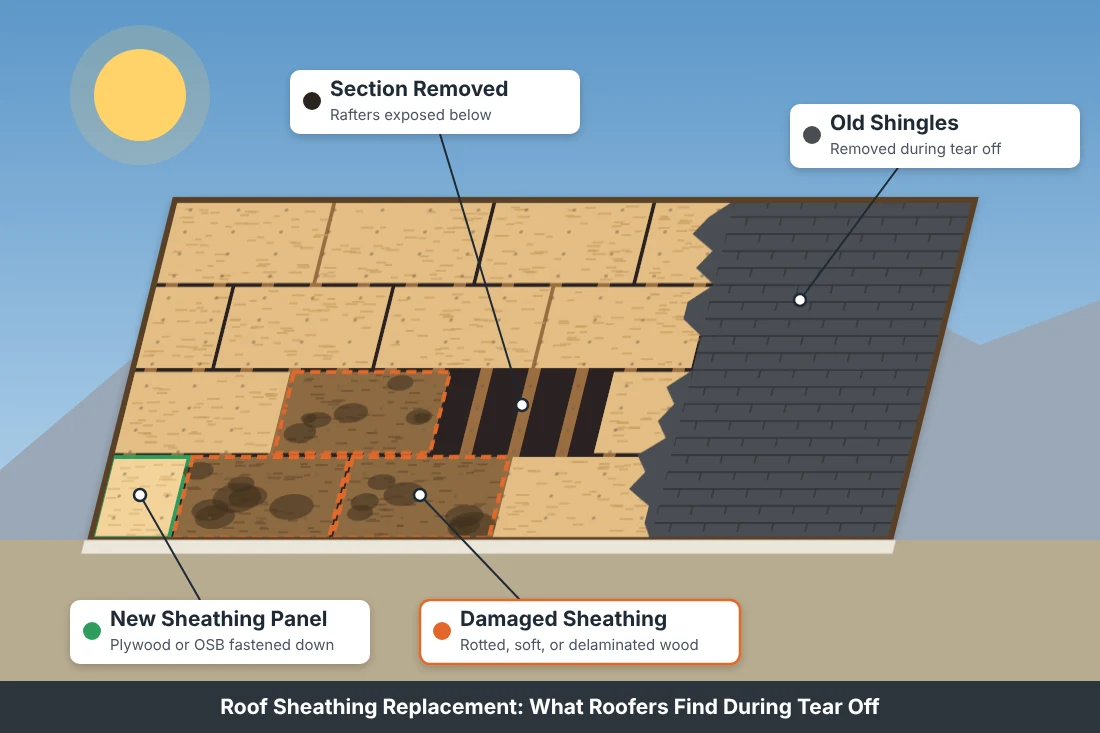
The most reliable assessment happens during tear off. Once the old shingles and underlayment are removed, the crew can see the entire surface and check it for rot, delamination, soft or spongy areas, and wood that will no longer hold nails securely. Water damaged roof sheathing often looks darkened, swollen, or crumbly at the edges. This is why even an experienced roofer usually cannot give an exact sheathing count before the project starts.
When Does Roof Sheathing Need to Be Replaced?
Roof sheathing replacement is generally needed when the wood is rotted, delaminated, sagging between supports, or too weak to hold roofing fasteners. Panels that have separated into layers, boards that crumble around nail holes, and soft spots that flex under foot traffic should not be left in place under a new roof. Sheathing may also need attention when it is significantly thinner than what the new roofing material requires.
Not every stain means a panel must go. Light surface discoloration from an old, repaired leak may leave the wood structurally sound, and a good roofer will distinguish between cosmetic marks and true damage. The goal is to replace what is compromised without replacing solid material unnecessarily, and a trustworthy roofing contractor in Reno should be willing to show you the damaged areas they find.
Can You Put a New Roof Over Damaged Sheathing?
Installing new roofing over damaged sheathing is not a good idea. Nails and fasteners need solid wood to grip, and weak sheathing can allow shingles to loosen in high winds, which is a real concern in the Reno area. Soft or uneven sheathing can also show through as dips and waves in the new roof surface.
There is a warranty consideration as well. Roofing manufacturers generally expect their products to be installed over a sound, properly attached deck, and installing over compromised sheathing can put coverage at risk. Paying for a new roof only to leave damaged wood underneath undermines much of the value of the investment.
What Happens If Damaged Roof Sheathing Is Not Replaced?
Leaving damaged sheathing in place usually allows the problem to grow. Moisture that has already reached the wood can spread rot to neighboring panels and into the rafters or trusses that support them. Over time, sagging may worsen, leaks may return, and conditions in the attic may become favorable for mold. In a heavy snow year, weakened sheathing also has less ability to carry the load placed on the roof. Addressing it during the current project is almost always simpler and less expensive than opening the roof again later.
Roof Sheathing During a Roof Replacement
Because sheathing damage is often hidden until tear off, many roofing estimates explain how replacement sheathing will be handled if damaged sections are found. Ask your roofer how they evaluate the sheathing, how they will communicate what they find, and how any replacement panels will be priced. Clear answers up front help prevent surprises once the old roof is removed.
When sheathing replacement is needed, the crew removes the damaged sections, installs new plywood or OSB panels fastened to the framing, and then continues with underlayment and roofing. On most homes this adds relatively little time to the project. If you are still in the planning stage, our overview of roof replacement cost in Reno can help you set expectations for the overall budget.
Planning for Sheathing in Your Reno Roof Project
Roof sheathing is easy to overlook because you never see it once the roof is finished, but it determines how well everything above it performs. Knowing why sheathing deteriorates, how damage is identified, and when replacement is truly necessary helps you make confident decisions during a roofing project.
Scott Roofing has served homeowners throughout Reno, Sparks, and Washoe County since 1948, and that experience includes seeing how Northern Nevada weather affects what lies beneath the shingles. If you are planning a new roof or have noticed sagging or attic staining, you can contact Scott Roofing to schedule an inspection and talk through what your project may involve.
For all your roofing needs in Reno, Scott Roofing provides professional roofing services to residential and commercial property. To request a quote or schedule a professional roof inspection, contact Scott Roofing today or call 775-331-5090.