Ice Dams on Your Roof: Causes, Prevention, and Removal in Reno
November 9, 2026
A heavy snowfall can make Reno look like a postcard, but the days that follow can quietly create one of the most frustrating winter roofing problems. Ice dams on roof edges form when melting snow refreezes along the eaves, trapping water that has nowhere to go. That water can back up beneath the shingles and find its way into attics, ceilings, and walls long before a homeowner notices anything is wrong. For homeowners in Reno, NV and Sparks, NV, understanding what causes ice dams and how to prevent them is one of the best ways to protect a home through the winter.
What Are Ice Dams on a Roof?
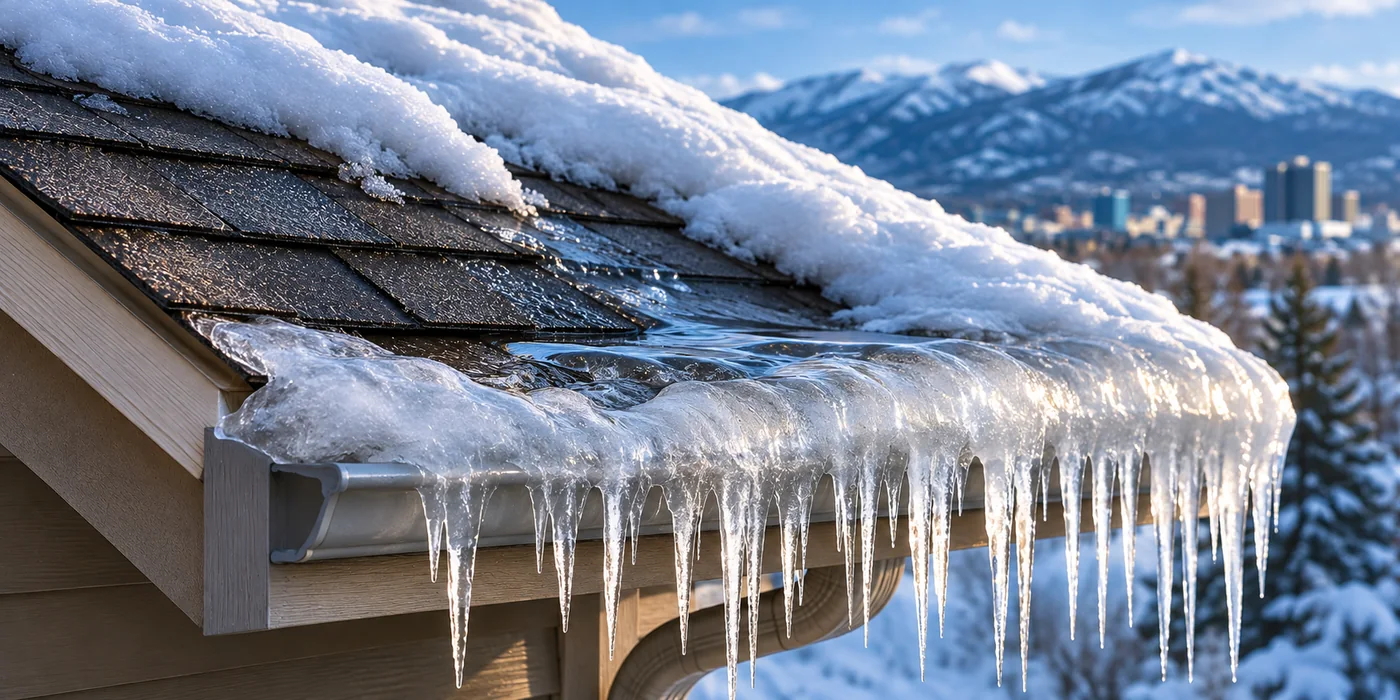
An ice dam is a ridge of ice that builds up along the lower edge of a roof, usually right above the gutters. You will often see a thick band of ice at the eaves with heavy icicles hanging below it. The ice itself is not the main problem. The real danger is the pool of water that collects behind the dam as snow higher on the roof continues to melt. Shingles are designed to shed water that flows downhill, not to hold back standing water, so that trapped meltwater can work its way under the roofing and into the home.
What Causes Ice Dams?
Ice dams are caused by uneven roof temperatures. When warm air from the living space escapes into the attic, it heats the underside of the roof deck and melts the snow sitting on the upper part of the roof. The meltwater runs down the slope until it reaches the eaves, which hang out past the exterior walls and stay much colder. Once the water hits that cold edge it refreezes, and the ice ridge grows a little more with every cycle of melting and freezing.
In Northern Nevada, the conditions for ice dams often line up after a significant storm followed by cold nights and sunny days. Homes with thin attic insulation, air leaks around recessed lights and attic hatches, or poor ventilation are especially prone to the problem. Our guide to roof ventilation in Reno, NV explains how balanced airflow keeps the roof deck cold and reduces the melting that leads to ice dams. North-facing roof sections, low-slope areas, and valleys that hold snow longer can also see more ice buildup.
How Ice Dams Damage Your Roof and Home
Ice dam roof damage often starts out of sight. Water that backs up under the shingles can soak the roof decking, saturate attic insulation, and drip onto drywall, leaving stains on ceilings and along the tops of exterior walls. Over time, repeated moisture can lead to rotted sheathing, peeling paint, warped trim, and conditions that encourage mold growth. Our article on whether a roof leak can cause mold explains why even slow leaks deserve attention.
The weight of the ice can cause damage as well. Thick ice along the eaves can pull gutters loose, bend fascia boards, and loosen shingles at the roof edge. Large icicles falling from the roofline can also be a safety concern near walkways and entry doors. Many homeowners first realize they have an ice dam problem when they see water stains inside, which is why it helps to know the warning signs before the worst of winter arrives.
How to Prevent Ice Dams
The most effective ice dam prevention focuses on keeping the entire roof surface at a consistent, cold temperature. That means stopping warm air from reaching the attic and moving out any heat that does get there. Practical steps include:
- Sealing air leaks around light fixtures, vents, chimneys, and attic access openings
- Adding attic insulation where coverage is thin or uneven
- Making sure soffit intake vents are open and exhaust vents are working
- Keeping gutters and downspouts clear before winter
- Pulling heavy snow off the lower edge of the roof with a roof rake from the ground
When a roof is replaced, some of the best long-term protection is installed right under the shingles. A self-adhering membrane along the eaves and in valleys helps keep water out even when an ice dam forms, and our article on ice and water shield explains where it belongs and why it matters on Reno roofs. Combining that membrane with good ventilation and insulation addresses both the cause of ice dams and the damage they can do.
Do Heat Cables and Heat Tape Work?
Roof heat cables, sometimes called heat tape for roof edges, are electric cables installed in a zigzag pattern along the eaves and inside gutters and downspouts. They warm narrow channels through the ice so that meltwater has a path to drain off the roof. In the right situations, they can be a helpful tool for problem areas that ice up every winter, such as a valley above an entryway. However, they do not fix the underlying cause of ice dams, they add to energy costs, and they need to be installed correctly to avoid damaging shingles or creating an electrical hazard. For most homes, improving insulation and ventilation should come first.
Safe Ice Dam Removal
When ice has already formed, it is tempting to grab a hammer, an ice pick, or a shovel and start chipping away. Unfortunately, this is one of the fastest ways to crack shingles, tear underlayment, and damage gutters, and it puts homeowners at serious risk of falling from a ladder or an icy roof. Throwing rock salt on the roof is not a good solution either, since it can harm shingles, metal flashing, and the plants below.
Professional ice dam removal typically uses low-pressure steam to melt channels through the ice without harming the roofing materials underneath. A roofer can also check for any damage the ice has already caused and identify why the dam formed in the first place. If water is actively coming into your home, our emergency roof repair guide explains the steps to take right away while you wait for help.
When to Call a Roofer About Ice Dams
You should contact a roofing professional if you see water stains on ceilings or walls, ice building up along the same section of roof every winter, gutters pulling away from the house, or wet insulation in the attic. Recurring ice dams are a sign that something in the roofing system needs attention, whether that is ventilation, insulation, flashing, or missing waterproofing at the eaves. Catching the problem early is far less expensive than repairing rotted decking and interior water damage later. Scott Roofing has helped homeowners throughout Reno, Sparks, and Washoe County deal with winter roofing problems since 1948, and you can contact Scott Roofing to schedule an inspection if ice dams are becoming a pattern on your home.
For all your roofing needs in Reno, Scott Roofing provides professional roofing services to residential and commercial property. To request a quote or schedule a professional roof inspection, contact Scott Roofing today or call 775-331-5090.