Roof Underlayment in Reno, NV: Synthetic vs. Felt and Which Is Best
November 23, 2026
When homeowners compare roofing estimates, most of the attention goes to the shingles, tile, or metal they will see from the street. Beneath those materials is a layer that plays an equally important role in keeping water out of the home. Roof underlayment is the protective barrier installed between the roof deck and the finished roofing, and the type used can affect how well a roof holds up over time. For homeowners in Reno, NV and Sparks, NV, understanding the difference between synthetic and felt underlayment can help you ask better questions before a roof replacement.
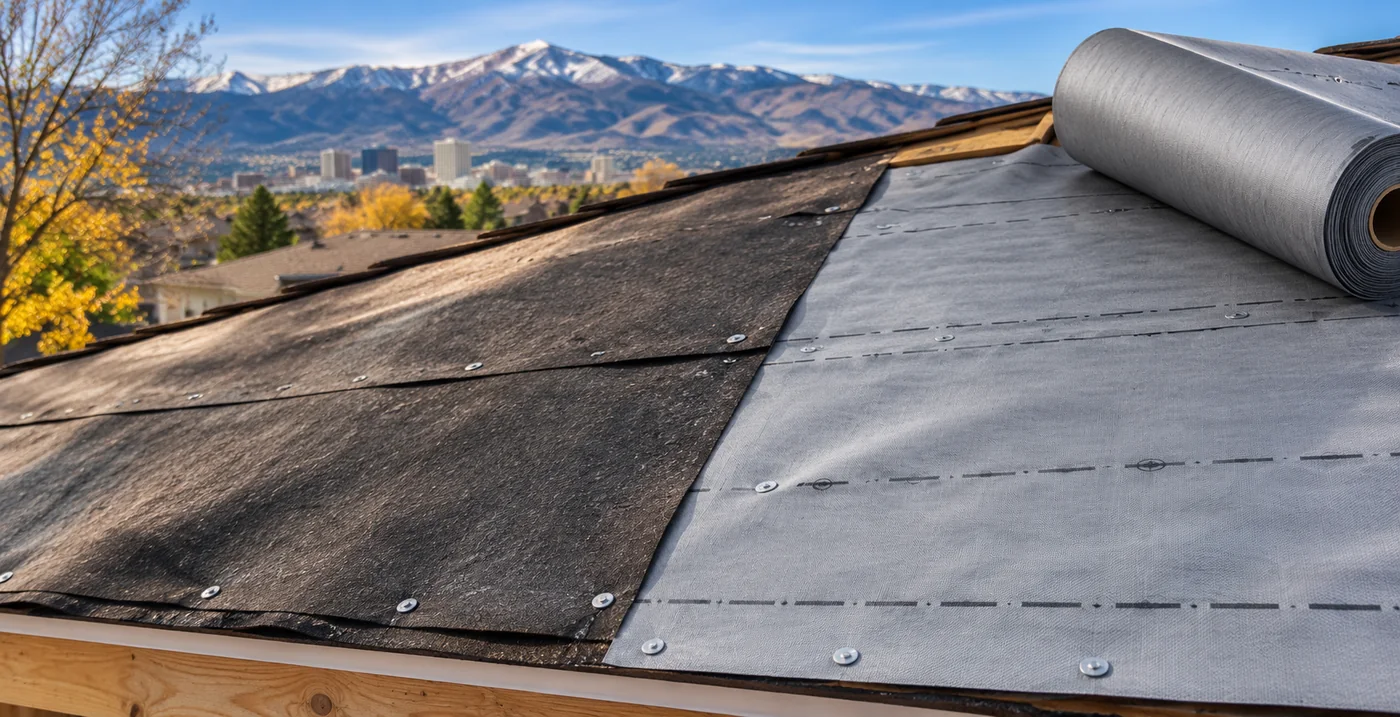
What Is Roof Underlayment?
Roof underlayment is a water-resistant material rolled out over the roof decking before the shingles, tile, or metal panels are installed. It sits directly on top of the plywood or OSB sheathing and beneath the visible roofing. If you have read our articles on roof decking and roof sheathing, underlayment is the next layer up in the roofing system. It is installed in overlapping rows from the bottom of the roof to the top so that water flowing down the slope is shed over the seams rather than into them.
Why Roofing Underlayment Matters
Shingles and tile are the first line of defense, but they are not completely watertight on their own. Wind can lift shingle edges, driving rain and snow can work under roofing materials, and small gaps can form around fasteners and transitions over time. Roofing underlayment acts as a secondary barrier that catches that water and directs it off the roof before it reaches the decking. It also protects the deck during installation, creates a more uniform surface for the roofing, and is often required by roofing manufacturers for their warranties to apply.
Underlayment is especially important on tile roofs, which are common throughout Northern Nevada. Concrete and clay tiles shed most of the water, but some moisture naturally passes between the tiles, so the underlayment beneath them does much of the actual waterproofing work. Our guide to tile roof maintenance in Reno explains why the underlayment is often the component that determines how long a tile roof lasts.
Roof Underlayment Types
There are three main roof underlayment types used on residential roofs today. Each has a specific purpose, and many roofs use more than one type in different areas.
- Asphalt-saturated felt, the traditional underlayment used for decades
- Synthetic underlayment, a woven or spun polymer sheet that has become the modern standard
- Self-adhered rubberized membrane, used in leak-prone areas like eaves and valleys
The self-adhered membranes are a specialty product that seals around nails and protects against water that backs up under the roofing. Our article on ice and water shield covers where those membranes are installed, so this article focuses on the underlayment that covers the rest of the roof.
Synthetic Roof Underlayment
Synthetic roof underlayment is made from polypropylene or polyethylene and is engineered to be strong, light, and water-resistant. It is much more tear resistant than felt, which matters when crews are walking on it and when wind gusts hit the roof during installation. Synthetic rolls are lighter and cover more area per roll, which can make installation faster and cleaner. Synthetic underlayment also resists wrinkling and absorbing moisture, so it provides a flatter surface for shingles and holds up better if it is briefly exposed to weather before the roofing goes on.
Felt Roofing Underlayment
Felt roofing underlayment, sometimes called tar paper, is made from a paper or fiberglass mat saturated with asphalt. It is commonly sold in two weights, often referred to as 15-pound and 30-pound felt, with the heavier version offering more durability. Felt has a long track record and usually costs less than synthetic underlayment. However, it tears more easily, it can wrinkle if it absorbs moisture, and it can dry out and become brittle with long exposure to heat and sun.
Synthetic vs. Felt Underlayment: Which Is Better?
When comparing synthetic vs felt underlayment, synthetic comes out ahead for most homes. It is stronger, more resistant to tearing and moisture, lighter to handle, and better at staying flat under the finished roofing. Felt still has a place in some applications and budgets, but the difference in upfront cost is usually a small part of a complete roofing project, and the performance advantages of synthetic often outweigh the savings. Many roofing manufacturers also recommend synthetic products as part of their complete roofing systems.
What Is the Best Roof Underlayment for Reno Homes?
The best roof underlayment for a Reno home depends on the roofing material, the slope of the roof, and the areas of the roof that face the most risk. Northern Nevada roofs deal with intense summer sun, strong winds, snow, and repeated freeze-thaw cycles, which is why durable synthetic underlayment is a strong choice for most residential projects. Self-adhered membrane is typically added at the eaves, in valleys, and around penetrations where ice and concentrated water flow are most likely, and our article on ice dams on your roof explains why that protection matters in winter. Tile roofs may call for heavier, high-temperature underlayment designed for long service beneath the tile.
The details of installation matter just as much as the product. Proper overlaps, correct fastening, and careful work around the drip edge, flashing, and vents all help the underlayment do its job. When you compare estimates, ask each contractor which underlayment they plan to use, where they will install self-adhered membrane, and how the underlayment fits into the manufacturer's warranty.
Choosing the Right Underlayment for Your Roof
Roof underlayment is hidden once the roof is finished, but it has a direct effect on how well your home is protected from leaks for years to come. Understanding the difference between synthetic and felt underlayment helps you evaluate roofing proposals with confidence and avoid cutting corners on a layer you will never see. Scott Roofing has installed and repaired roofs across Reno, Sparks, and Washoe County since 1948, and our team recommends roofing systems built for Northern Nevada conditions. If you are planning a roof replacement, you can contact Scott Roofing to talk through the materials that make the most sense for your home.
For all your roofing needs in Reno, Scott Roofing provides professional roofing services to residential and commercial property. To request a quote or schedule a professional roof inspection, contact Scott Roofing today or call 775-331-5090.